Introduction: Understanding Food Beyond Calories
Food does more than satisfy hunger. It provides energy, supports tissue repair, supplies essential nutrients and helps maintain the systems that keep your body functioning.
Yet nutrition advice can make eating unnecessarily complicated. Carbohydrates are labelled bad, fats are avoided, protein becomes the only priority, and entire food groups are eliminated in the pursuit of better health.
The truth is simpler: your body needs a combination of nutrients, and no single food group can provide everything it requires.
The Indian Council of Medical Research–National Institute of Nutrition (ICMR–NIN) emphasises dietary variety and balanced food choices in its Dietary Guidelines for Indians 2024 1.
Understanding what different food groups contribute can help you make informed choices without fearing familiar foods or following unnecessarily restrictive diets.
Quick Answer: What Are Food Groups?
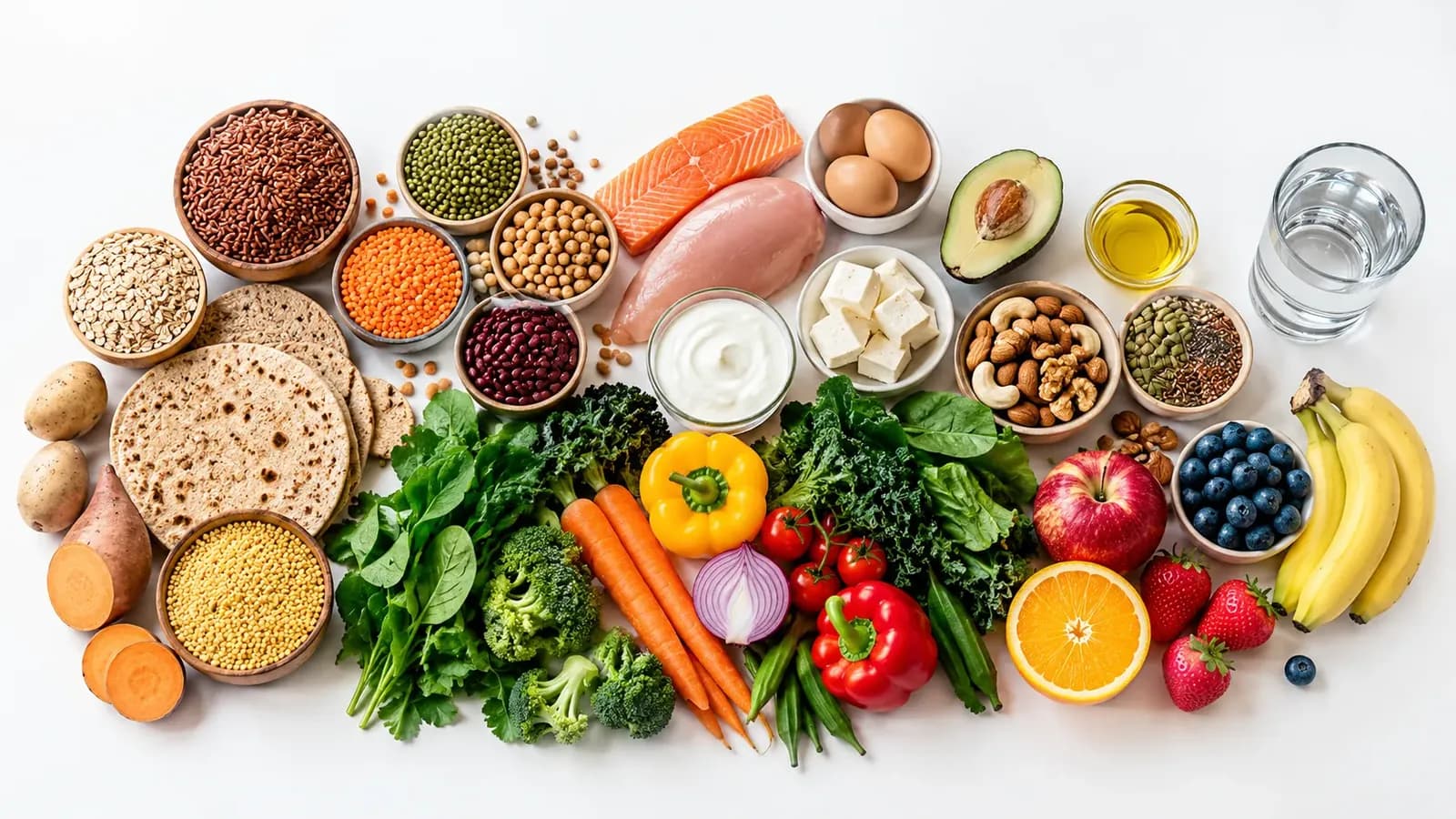
Food groups organise foods according to their nutritional characteristics and the roles they play in the body. The major groups include carbohydrate-rich foods, protein-rich foods, fats, fruits and vegetables, and foods that supply vitamins and minerals. Fibre and water are also essential components of a nourishing diet.
These categories overlap. Pulses provide protein, carbohydrates and fibre. Nuts provide fats, protein and minerals. Fruits supply carbohydrates, fibre and a range of vitamins and other beneficial compounds.
A healthy eating pattern combines these foods in suitable amounts, guided by your age, activity level, health needs, preferences and stage of life. The World Health Organization (WHO) identifies adequacy, balance, moderation and diversity as core principles of a healthy diet 2.
Carbohydrates: Your Body’s Main Energy Source
Carbohydrates provide energy for everyday activities and help fuel the brain and working muscles. They are found in rice, roti, millets, oats, bread, potatoes, fruits, pulses and many other foods.
Carbohydrates are not inherently unhealthy. Their quality matters. Whole grains, millets, fruits, vegetables and pulses provide carbohydrates alongside varying amounts of fibre, vitamins and minerals. The WHO recommends obtaining carbohydrates primarily from whole grains, vegetables, fruits and pulses rather than relying heavily on free sugars 3.
What happens when you eat too little?
Very restrictive carbohydrate intake can make it harder to obtain enough fibre and certain micronutrients, particularly if whole grains, fruits and pulses are eliminated without suitable replacements. Some people may also experience fatigue or reduced exercise performance when making substantial dietary changes.
What happens when you eat too much?
Consistently consuming more energy than your body uses can contribute to weight gain. Large amounts of refined, low-fibre foods may also displace more nutritious choices.
You do not need to give up rice or roti to eat healthily. Portion sizes, food quality and what accompanies these staples all matter.
Protein: The Building Blocks of Your Body
Protein supports muscle maintenance, tissue repair, immune function and the production of enzymes and other essential molecules. It is particularly important during growth, pregnancy and recovery from illness.
Indian diets offer many protein sources, including dal, beans, chickpeas, peas, soy, milk, curd, paneer, eggs, fish, chicken, nuts and seeds. Well-planned vegetarian diets can provide adequate protein, while vegan diets need particular attention to meeting overall nutrient requirements.
What happens when you eat too little?
Inadequate protein intake over time can contribute to muscle loss, impaired recovery and, in severe cases, poor growth or protein-energy malnutrition. The risk increases when overall food intake is insufficient or nutritional needs are elevated.
What happens when you eat too much?
More protein is not automatically better. Excess protein can add unnecessary energy to your diet or displace other nutritious foods. People with chronic kidney disease may need individualised protein guidance from their healthcare professional.
The practical goal is to include suitable protein sources regularly rather than assuming that supplements or exceptionally high protein intake are necessary for everyone.
Fats: Essential for Cells, Hormones and Nutrient Absorption
Dietary fats help maintain cell structure, provide essential fatty acids, support normal body functions and enable the absorption of vitamins A, D, E and K. They also provide energy.
Fats occur in nuts, seeds, groundnuts, sesame, edible oils, dairy products, eggs, fish and meat. Unsaturated fats, found in foods such as nuts, seeds and many plant oils, are generally preferred over saturated and trans fats for cardiovascular health 2.
What happens when you eat too little?
An extremely low-fat diet can make it harder to obtain essential fatty acids and absorb fat-soluble vitamins. It can also restrict food variety unnecessarily.
What happens when you eat too much?
Fat is energy-dense, so consistently consuming more energy than your body needs can contribute to weight gain. A diet high in saturated fat may also increase LDL cholesterol, depending on the overall dietary pattern and the foods replacing it.
The goal is not to eliminate fat. It is to include appropriate amounts and a variety of sources.
Fibre: Essential Support for Your Gut
Fibre is found in plant foods and is not fully digested by the human body. Different types of fibre support bowel regularity, contribute to a healthy gut environment and can help with blood glucose and cholesterol management.
Good sources include vegetables, fruits, whole grains, beans, lentils, chickpeas, nuts and seeds. The WHO recommends fibre-rich foods as part of a healthy dietary pattern and encourages adults and children to obtain carbohydrates from sources that naturally provide dietary fibre 3.
What happens when you eat too little?
Low fibre intake can contribute to constipation and make it harder to maintain a dietary pattern associated with good digestive health.
What happens when you eat too much?
Increasing fibre too quickly can cause bloating, gas or abdominal discomfort. Some digestive conditions may require individualised adjustments.
Increase fibre gradually, drink adequate fluids and include a variety of plant foods. Everyday foods such as dal, beans, vegetables, fruits and whole grains can all contribute.
Vitamins and Minerals: Small Nutrients, Essential Functions
Vitamins and minerals are needed in relatively small amounts, but their roles are substantial. They support immunity, nerve function, bone health, oxygen transport, energy metabolism and many other processes.
Iron helps the body produce haemoglobin, which carries oxygen in the blood. Inadequate iron can lead to iron-deficiency anaemia 4. Vitamin B12 is essential for normal nerve function, DNA synthesis and red blood cell formation 5. Calcium and vitamin D support bone health, while folate is important for cell division and early pregnancy development.
A varied diet containing vegetables, fruits, pulses, whole grains, dairy or suitable alternatives, nuts, seeds and other appropriate protein sources helps supply many of these nutrients.
What happens when you get too little?
The effects depend on the nutrient. Iron deficiency may cause tiredness and weakness. Vitamin B12 deficiency can affect blood cells and nerves, while inadequate calcium and vitamin D can compromise bone health.
Menstruation, pregnancy, restrictive diets, digestive disorders and certain medications can increase the risk of specific deficiencies.
Can you consume too much?
Yes. Excessive intake of certain vitamins and minerals, particularly through supplements, can cause harm. Supplements are useful when there is a demonstrated need or a clear clinical indication, but taking more does not guarantee better health.
Water: Essential for Everyday Body Functions
Water supports temperature regulation, circulation, digestion, kidney function and the transport of nutrients. The body continuously loses water through urine, sweat, breathing and bowel movements, so these losses need to be replaced.
Water needs vary with climate, activity, age, pregnancy, breastfeeding, illness and individual health conditions. Dietary reference guidance from the National Academies explains that total water intake includes water from beverages and food, and that requirements vary across life stages 6.
Too little fluid can cause dehydration, with symptoms such as thirst, headache, dizziness and reduced urine output. Severe dehydration needs prompt medical attention.
There is no single fluid target that suits everyone. Pay attention to thirst, activity, weather and any fluid restrictions prescribed for a medical condition.
Why Eliminating Entire Food Groups Can Backfire
Some people need to restrict particular foods because of allergies, coeliac disease or other medical conditions. Others may choose vegetarian or vegan diets for personal, cultural or ethical reasons. These patterns can be compatible with good health when appropriately planned.
The difficulty arises when an entire food group is removed without considering what it contributes nutritionally.
Avoiding all carbohydrates can reduce the intake of whole grains, fruits, pulses and fibre. Avoiding all fats can compromise essential fatty acid intake and the absorption of certain vitamins. Excluding animal products without suitable planning can make nutrients such as vitamin B12 harder to obtain.
The key question is not simply, “What should I stop eating?” It is also, “What nutrients might I lose, and how will I replace them?”
A balanced diet does not need to include every food. It needs to provide the nutrients your body requires. If a medical condition calls for dietary restrictions, a qualified healthcare professional or registered dietitian can help you plan appropriate alternatives.
Building a Balanced Indian Plate
You do not need an elaborate meal plan or expensive ingredients to begin eating more thoughtfully. Familiar Indian foods can provide a strong nutritional foundation.
A practical starting point is to include vegetables, a suitable carbohydrate source and a protein-rich food in your main meals. Add fruit, nuts, seeds, dairy or appropriate alternatives across the day according to your needs and preferences. This approach reflects the broader principle that a healthy diet combines different food groups rather than relying on one food or nutrient. 1 2
For example, a meal might include rice or roti, dal, vegetables and curd. Other options include idli with sambar, vegetable khichdi with curd, or chapati with chana and vegetables.p
These are examples, not rigid rules. The balance of your diet matters over time; you do not need to achieve a perfect combination of every nutrient at every meal. The NHS Eatwell Guide similarly explains that a balanced pattern can be considered across a day or even a week, rather than judged meal by meal 7.
Your portions and choices should reflect your appetite, activity, health needs, budget and cultural preferences.
Does Everyone Need the Same Diet?
No. Nutritional needs change throughout life and vary between individuals.
Children need sufficient energy and nutrients for growth. Adolescents have increased nutritional demands during puberty. Menstruating people may need particular attention to iron intake. Pregnancy increases the importance of meeting specific nutritional requirements, while older adults may need to pay closer attention to protein, calcium, vitamin D and overall dietary adequacy.
Physical activity, body size, medical conditions, medications, food access and personal preferences also influence what works best.
People living with diabetes, kidney disease, digestive disorders or other medical conditions may need individualised dietary guidance. A diet that suits one person may not suit another.
A healthy diet is not a fixed menu that everyone must follow. It is a sustainable eating pattern that provides adequate nutrients, variety and balance while respecting individual needs and cultural context 2.
Key Takeaways
- Carbohydrates provide energy. Choose a variety of sources, including whole grains, pulses, fruits and vegetables.
- Protein supports growth and repair. Include suitable protein-rich foods regularly.
- Fats are essential. Choose appropriate amounts and varied sources rather than eliminating fat altogether.
- Fibre supports digestive health. Build your intake through varied plant foods.
- Vitamins and minerals matter. Both deficiencies and excessive supplementation can cause harm.
- Water is essential. Fluid needs vary with the individual and circumstances.
- Eliminating food groups without a plan can create nutritional gaps. Replace nutrients when restrictions are necessary.
- Balance matters more than perfection. Consistent, varied and realistic food choices are more useful than fear-driven dietary rules.
A Final Thought from Saisha
Your body does not need you to fear food. It needs you to understand it. Food supports growth, recovery, metabolic health and overall wellbeing, but no single food or nutrient can prevent or cure every illness. Nutrition works alongside sleep, physical activity, healthcare and other aspects of daily life.
Start with the foods available to you. Build variety where you can. Make changes you can sustain, and seek professional guidance when your needs are specific.
The goal is not to eat less of everything. It is to give your body what it needs.
References
- Indian Council of Medical Research (ICMR)–National Institute of Nutrition (NIN). Dietary Guidelines for Indians 2024. Revised Edition, 2024. ICMR–NIN — Dietary Guidelines for Indians 2024
- World Health Organization (WHO). Healthy Diet. Updated January 26, 2026. WHO — Healthy Diet
- World Health Organization (WHO). Carbohydrate Intake for Adults and Children: WHO Guideline. Published July 17, 2023. WHO — Carbohydrate Intake for Adults and Children
- National Institutes of Health (NIH), Office of Dietary Supplements. Iron: Fact Sheet for Health Professionals. NIH Office of Dietary Supplements — Iron
- National Institutes of Health (NIH), Office of Dietary Supplements. Vitamin B12: Fact Sheet for Health Professionals. NIH Office of Dietary Supplements — Vitamin B12
- Institute of Medicine, National Academies. Dietary Reference Intakes for Water, Potassium, Sodium, Chloride, and Sulfate. Published 2005. National Academies Press — Dietary Reference Intakes for Water, Potassium, Sodium, Chloride, and Sulfate
- National Health Service (NHS). The Eatwell Guide. NHS — The Eatwell Guide