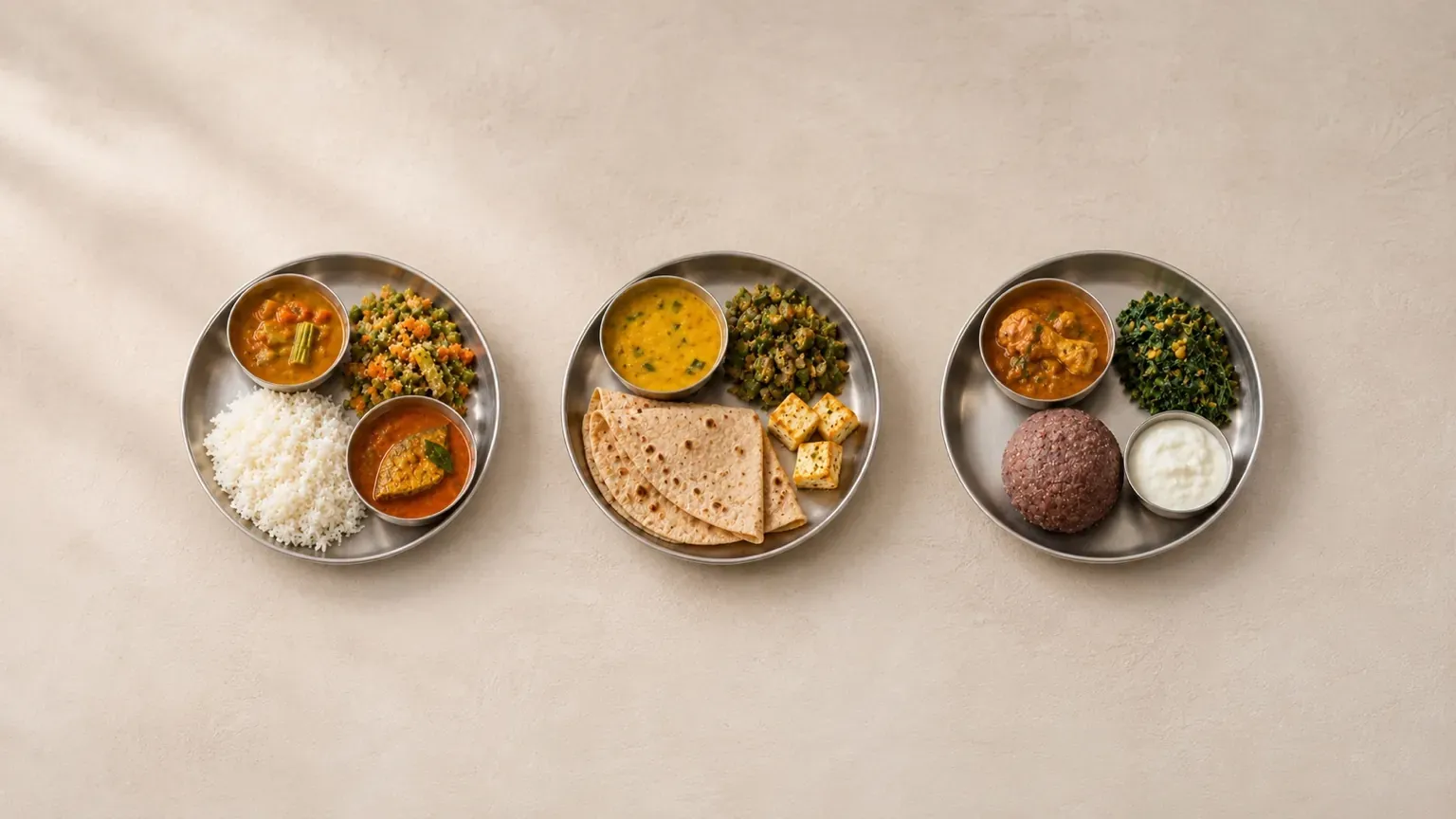
If you have polycystic ovary syndrome (PCOS), you may have been told to stop eating rice, avoid wheat or replace your usual meals with millets. The reasoning often sounds convincing: carbohydrates raise blood glucose, insulin resistance is common in PCOS, and therefore cutting carbohydrates must be better for your hormones.
But which carbohydrate foods should you actually choose when you have PCOS? The answer depends on more than the name of the grain. Its fibre content, processing, portion size, preparation and the foods eaten alongside it all matter.
The 2023 International Evidence-based Guideline for PCOS recommends sustainable, healthy eating tailored to individual needs and preferences. It does not identify one dietary composition as superior for all PCOS outcomes. 1
Quick Answer: Is Rice, Roti or Millet Better for PCOS?
There is no single best grain for every woman with PCOS. Rice, whole-wheat roti and millets can all fit into a balanced eating pattern.
When choosing carbohydrates, focus on:
- Fibre and processing: Include fibre-rich, minimally processed foods where practical.
- Portion and meal composition: Consider how much you eat and what accompanies the carbohydrate source.
- Variety: Include different grains, pulses, vegetables and other nutritious foods.
- Sustainability: Choose foods that suit your preferences, budget, culture and health needs.
The aim is to build a balanced eating pattern—not to follow a restrictive food rule or buy expensive speciality grains. 1 2
Why Do Carbohydrates Matter in PCOS?
Carbohydrates are an important source of energy. During digestion, many carbohydrate-containing foods are broken down into glucose, a type of sugar that enters your bloodstream. When blood glucose rises after a meal, your pancreas releases insulin, a hormone that helps glucose move from your bloodstream into your body’s cells, where it can be used for energy or stored.
Insulin resistance occurs when the body’s cells respond less effectively to insulin. The pancreas may then produce more insulin to help keep blood glucose within a healthy range. In PCOS, higher insulin levels can stimulate the ovaries to produce more androgens (hormones such as testosterone) and contribute to hormonal symptoms in some women.
However, PCOS is complex. Not every woman with PCOS has the same degree of insulin resistance, and insulin resistance does not necessarily mean that blood glucose levels are already high. Blood glucose can remain within the normal range while the body compensates by producing more insulin.
The goal is not simply to reduce blood glucose or eliminate carbohydrates. It is to develop an eating pattern that supports overall metabolic health and meets your nutritional needs. The World Health Organization recommends obtaining carbohydrates primarily from sources such as whole grains, vegetables, fruits and pulses as part of a healthy diet. 2
Rice and PCOS: Do You Need to Stop Eating Rice?
Rice can be part of a balanced PCOS diet. The type of rice, portion size and overall meal composition are more useful considerations than treating rice as a forbidden food.
White rice is generally more refined and contains less fibre than brown rice. Brown rice retains more of the grain’s outer layers, which contribute fibre and other nutrients. However, the best choice also depends on availability, preference and how the rice is prepared.
To make a rice-based meal more balanced:
- Pair rice with dal, sambar, rajma, chana or another protein-containing food.
- Include vegetables for fibre and variety.
- Choose a portion that suits your appetite, activity level and health needs.
- Vary your grains across the week when practical.
You do not have to switch entirely to brown rice if it is expensive, difficult to prepare or not to your taste. A balanced meal using familiar foods can be a realistic starting point.
Roti and PCOS: Is Wheat Better Than Rice?
Whole-wheat roti can also fit into a balanced PCOS diet. Whole-wheat flour generally retains more of the grain’s components than refined flour, although the nutritional value of the meal depends on the flour, preparation and accompaniments.
Pair roti with foods such as:
- Dal, chana or rajma.
- Paneer, tofu, eggs, fish or chicken, depending on your preferences.
- Vegetable sabzi or another vegetable-rich dish.
- Curd, if you tolerate dairy.
Rice is not automatically worse than roti, and roti is not automatically better than rice. Both can be included in a varied diet; your overall eating pattern matters more than choosing one staple as universally superior.
Are Millets Better for PCOS?
Millets such as ragi, jowar, bajra and foxtail millet can add variety and nutrients to Indian meals. Depending on the type and preparation, they can contribute fibre, minerals and other beneficial nutrients.
However, millets are not guaranteed to be low-glycaemic foods, nor are they proven to balance PCOS hormones on their own.
A study examining common Indian food preparations found considerable variation in glycaemic index between foods made with different grains and pulses. Some millet-based preparations had a high glycaemic index, while certain pulse-based foods and broken-wheat upma had lower values among the foods tested. This illustrates why a food’s name alone cannot reliably predict its blood glucose response. 3
Processing also matters. Whole grains can be milled, polished or ground into flour, changing their structure and potentially influencing how quickly their starch is digested. A review of millet research reported promising findings for some metabolic outcomes, but it does not establish that every millet preparation is superior to rice or wheat for every person. 4
Choose millets if you enjoy them and they suit your needs. They are one useful option among several, not a compulsory replacement for your usual grains.
Glycaemic Index and Glycaemic Load: What Do They Mean?
You may encounter the terms glycaemic index (GI) and glycaemic load (GL) when researching PCOS diets.
Glycaemic index measures how much a carbohydrate-containing food raises blood glucose under standard testing conditions, compared with a reference food. Glycaemic load also accounts for the amount of available carbohydrate in a portion.
These measures can be useful, but they do not tell the whole story. A food’s glycaemic response can vary with its processing, cooking method, ripeness, portion and the other foods eaten alongside it. Research on Indian preparations has demonstrated variation even among foods made from whole grains. 3
You do not need to memorise GI charts or calculate the glycaemic load of every meal. Use these concepts as context when choosing foods, not as a rigid system for labelling meals good or bad.
How to Build a More Balanced Indian Meal
Rather than focusing only on the grain, consider the whole plate. A practical starting point is to include vegetables, a protein source and a carbohydrate-containing food. The proportions can vary according to appetite, activity, medical conditions and individual nutritional needs.
Here are some everyday examples:
- Rice meal: Rice with sambar or dal, vegetables and curd.
- Roti meal: Whole-wheat roti with chana, paneer or another protein source and vegetable sabzi.
- Millet meal: Ragi or jowar roti with dal and vegetables.
- South Indian breakfast: Idli or dosa with sambar, with portions and accompaniments adjusted to your needs.
- Mixed-grain meal: Combine different grains and pulses when convenient, without assuming a particular flour blend is essential.
Protein and vegetables help make meals more varied and nutritionally balanced. Pulses can contribute protein and fibre, while vegetables provide fibre and micronutrients. The aim is to develop a pattern you can sustain rather than follow a rigid formula at every meal. 2
Common Myths About Carbohydrates and PCOS
Myth 1: Women with PCOS must stop eating rice.
Fact: Rice can fit into a balanced diet. Portion size and the overall meal are relevant considerations.
Myth 2: Millets are always better than rice or wheat.
Fact: Nutritional value and glycaemic response vary with the grain, processing and preparation. Millets are useful options, not compulsory replacements. 3
Myth 3: Eating carbohydrates automatically worsens insulin resistance.
Fact: PCOS is influenced by multiple factors, and carbohydrate-containing foods differ in their nutritional composition. Overall dietary quality and individual health needs matter.
Myth 4: A low-GI diet is the only way to manage PCOS.
Fact: The international PCOS guideline does not identify one dietary composition as best for every outcome. Sustainable, healthy eating tailored to individual needs is the recommended foundation. 1
When Should You Seek Medical Advice?
If you have PCOS and are concerned about insulin resistance or your risk of diabetes, discuss appropriate assessment with your healthcare professional. Your clinician may consider factors such as blood glucose, blood pressure, lipid levels, medications and medical history.
Seek individual dietary advice if you have diabetes, are pregnant or breastfeeding, are trying to conceive, have kidney disease or another condition affecting your nutritional needs, or are considering a highly restrictive diet.
If you experience persistent irregular or absent periods, or other symptoms that concern you, seek medical assessment rather than relying on dietary changes alone. Nutrition can support PCOS care, but it does not replace appropriate diagnosis or treatment.
Key Takeaways
- Rice, whole-wheat roti and millets can all fit into a balanced PCOS diet.
- Fibre content, processing, portion size and the overall meal are useful factors to consider.
- Millets can add variety and nutrients, but they are not automatically lower-GI or better for everyone.
- Include a variety of vegetables, pulses, protein-rich foods and carbohydrate sources.
- Choose an eating pattern that suits your health needs, preferences, budget and daily life.
The bottom line: Instead of searching for one perfect grain, build balanced meals from familiar foods, add variety where practical and choose an approach you can sustain.
References
- Teede HJ, et al. Recommendations From the 2023 International Evidence-based Guideline for the Assessment and Management of Polycystic Ovary Syndrome. The Journal of Clinical Endocrinology & Metabolism. 2023;108(10):2447–2469. Read the guideline
- World Health Organization. Healthy diet. Updated January 2026. Read WHO guidance
- Shobana S, et al. Carbohydrate profiling & glycaemic indices of selected traditional Indian foods. Indian Journal of Medical Research. 2022;155(1):56–65. Read the research paper
- Anitha S, et al. A Systematic Review and Meta-Analysis of the Potential of Millets for Managing and Reducing the Risk of Developing Diabetes Mellitus. Frontiers in Nutrition. 2021;8:687428. Read the research paper