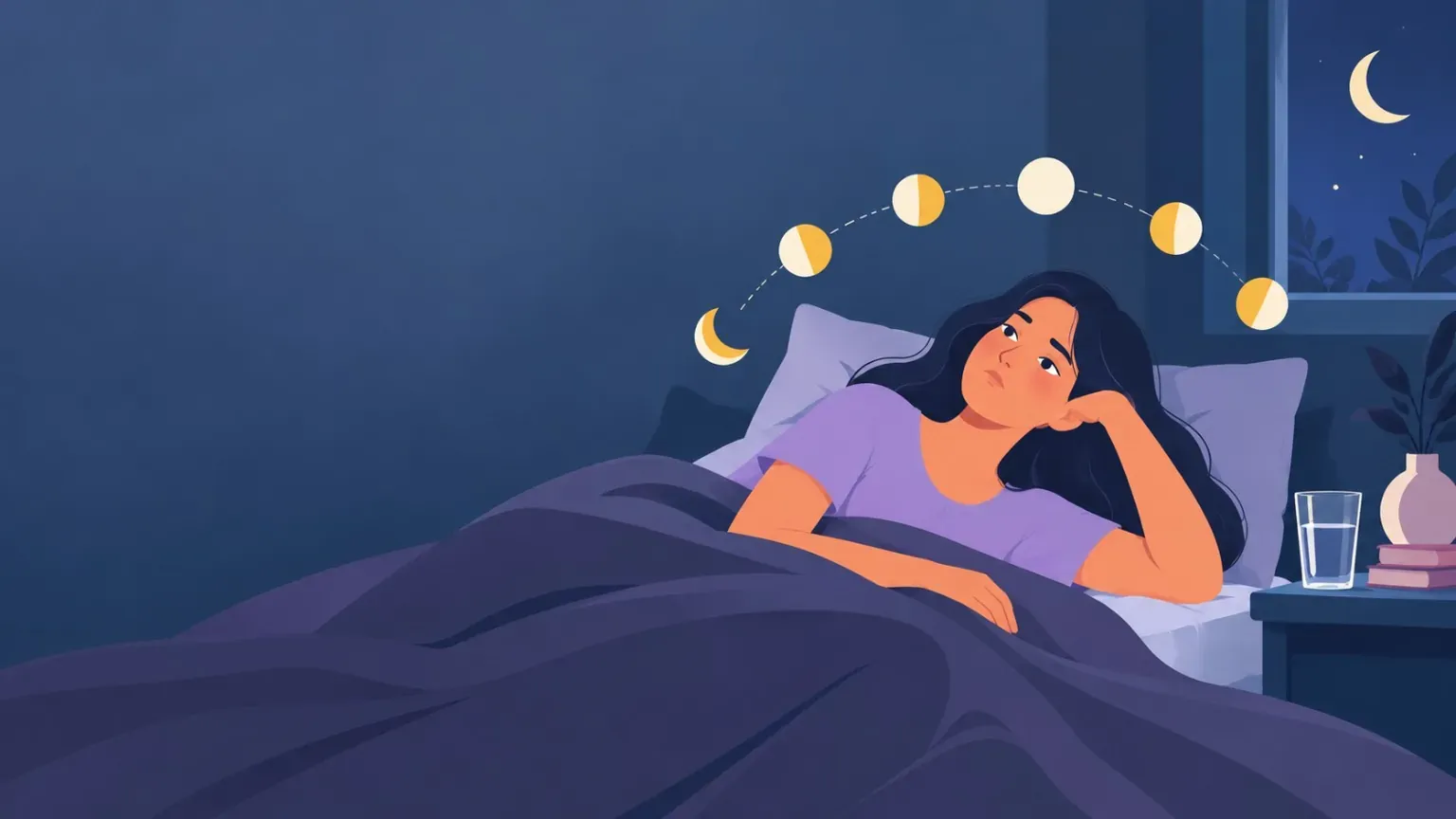
Perimenopause Is More Than Irregular Periods
Maybe your periods have started behaving differently. One month they arrive earlier than expected. The next month they are late. One period is heavier than usual, another is surprisingly light, and sometimes you skip one altogether. You may initially think, “Well, I suppose this is what happens in your 40s.”
Then something else changes. You are sleeping badly. You feel warmer at night. You are more irritable than usual. You cannot seem to find the right word. You feel tired even after sleeping. Your body seems to be changing in ways you cannot quite explain.
And suddenly, you are wondering: “Is all of this really because of my periods?”
It can be.
Perimenopause is not simply the period when menstruation becomes irregular. It is a whole-body hormonal transitionthat can affect physical, emotional and mental wellbeing. The World Health Organization describes perimenopause as the period around the menopausal transition, which can last several years and affect quality of life in different ways. 1
And for many Indian women, this transition happens while they are still working, raising children, caring for parents, managing homes and carrying responsibilities for everyone around them. That is why understanding what is happening matters.
From the Doctor’s Desk
Quick Answer
Perimenopause is the transition before menopause, when ovarian hormone activity becomes increasingly unpredictable.
Estrogen and progesterone do not simply decline in a smooth, predictable line. Hormone production and ovulation can fluctuate from cycle to cycle, which is why one month can feel completely different from the next. 2
Your periods may become:
- Shorter or longer
- Heavier or lighter
- More or less frequent
- Irregular
- Occasionally skipped
But periods are only one part of the picture.
Perimenopause can also affect:
- Sleep
- Mood and emotional wellbeing
- Memory and concentration
- Body composition
- Hot flashes and night sweats
- Headaches
- Muscles and joints
- Sexual health
- Vaginal and urinary health
- Fertility
Not every woman experiences all of these changes. Some women have relatively few symptoms, while others experience symptoms that significantly affect daily life. 1
And importantly, perimenopause is normal—but suffering unnecessarily through it is not something women simply have to accept.
What Actually Happens to Your Hormones?
Perimenopause is not a switch. Your ovaries do not suddenly stop working one day. Instead, ovarian activity gradually becomes less predictable. Some cycles may still involve ovulation, while others may not. Estrogen can fluctuate considerably, and progesterone production may become less consistent. 2
This hormonal variability is one reason perimenopause can feel so unpredictable. You may have a month where you feel completely normal. Then, suddenly, you may have poor sleep, irritability, breast tenderness, headaches or hot flashes. The menstrual cycle is often the first visible sign because ovulation becomes less regular. Eventually, periods stop permanently. Menopause is reached after 12 consecutive months without a menstrual period, provided there is no other explanation. 1
Your Periods May Change Before Anything Else
For many women, menstrual changes are the first clue.
Your cycle may become:
- Shorter
- Longer
- Heavier
- Lighter
- More unpredictable
- Occasionally absent
Some women notice that the number of days between periods changes. Others notice that the amount or duration of bleeding is different. These changes occur because ovulation becomes less consistent and ovarian hormone production becomes more variable. 2
But there is an important distinction: Irregular bleeding can be part of perimenopause. Abnormal bleeding still deserves attention.
Bleeding between periods, bleeding after sex, unusually heavy bleeding or bleeding that lasts substantially longer than usual should not automatically be blamed on perimenopause. Conditions such as fibroids, polyps, thyroid disorders and problems involving the uterine lining can also cause abnormal bleeding. 4
The Symptoms You May Not Expect
This is where perimenopause can become confusing. You may be looking at your period tracker, while your body is telling you something much bigger is happening.
Sleep Can Change
You may suddenly find yourself:
- Taking longer to fall asleep
- Waking repeatedly
- Waking too early
- Waking because of night sweats
- Feeling tired despite spending enough time in bed
Poor sleep can then affect almost everything else. You may feel more irritable, less focused and emotionally overwhelmed the following day. And that can create a frustrating cycle:
Hormonal changes → poor sleep → fatigue → lower emotional resilience → more stress → even poorer sleep. Sleep problems are recognised among the symptoms associated with the menopause transition. 1
Your Mood May Feel Different
Some women describe becoming more irritable. Others experience anxiety, low mood or increased emotional sensitivity. Sometimes the change is subtle. You may simply notice that things that previously did not bother you suddenly feel much harder to handle.
Mood symptoms during perimenopause can be influenced by hormonal changes, sleep disruption and life circumstances. The transition can therefore overlap with an already demanding stage of life. 2
But persistent depression, severe anxiety, hopelessness or an inability to function should not be dismissed as “just hormones.” They deserve proper assessment and support.
Brain Fog Is Real Too
You know the feeling. You walk into a room and forget why. You know someone’s name but cannot retrieve it. You have a word in your head, but it refuses to come out. You reread something because your concentration seems to have disappeared. These experiences can be unsettling.
Cognitive symptoms such as forgetfulness and difficulty concentrating can occur during the menopause transition. The Menopause Society describes brain fog and difficulty concentrating as common experiences for many midlife women. 2
Poor sleep, stress and anxiety can make these experiences feel even stronger. So if your brain feels different, it does not automatically mean that you are losing your memory or becoming less capable.
Hot Flashes Are Common—But They Are Not the Whole Story
Hot flashes and night sweats are among the best-known symptoms of perimenopause. A hot flash may feel like a sudden wave of heat spreading across the face, neck or chest. Some women also experience sweating, palpitations, chills or anxiety around the episode. 1
But not every woman experiences them. And the absence of hot flashes does not mean you are not going through perimenopause. For some women, sleep disruption, mood changes, brain fog or menstrual changes are much more noticeable. There is no single “correct” way to experience perimenopause.
Your Body Composition Can Change
Another common frustration is: “I am eating the same way, but my body is changing.” During midlife, women may notice changes in weight, muscle mass and where body fat is stored. This is not simply about willpower. Ageing, hormonal changes, sleep, physical activity, nutrition, muscle mass and genetics can all influence body composition.
That is why this stage is better approached as a time to protect health and strength, rather than endlessly chase the body you had at 25. Strength training, aerobic activity, adequate protein and a balanced diet can all become particularly valuable parts of healthy ageing.
Your Bones and Heart Deserve Attention
Perimenopause is also a useful time to think beyond symptoms. As estrogen levels decline around menopause, bone loss accelerates and the risk of osteoporosis becomes increasingly important. Cardiovascular risk also rises with age and changes after menopause. 1
That does not mean menopause suddenly causes heart disease. It means midlife is a good opportunity to review your overall health. Depending on your individual risk, this may include paying attention to:
- Blood pressure
- Blood glucose
- Cholesterol
- Bone health
- Weight and body composition
- Physical activity
- Sleep
- Family history
- Smoking and alcohol exposure
Menopause care should therefore be about more than treating hot flashes. It should be about healthy ageing.
Irregular periods can have several causes and do not automatically mean PCOS.
For otherwise healthy women aged 45 or older with typical symptoms and menstrual changes, current NICE guidance recommends identifying perimenopause clinically rather than relying on routine laboratory confirmation. Hormone levels fluctuate during this transition, so a single blood test may not accurately represent what is happening. 3
That does not mean blood tests are never useful. If symptoms occur at a younger age, are unusual, or suggest another condition, your doctor may recommend investigations. For example, thyroid disorders, anaemia and other conditions can sometimes produce symptoms that overlap with perimenopause.
The goal should not be:
“Let’s find the perfect hormone number.”
The goal should be:
“Let’s understand what is happening to you.”
Vaginal Dryness and Sexual Health Matter Too
This is one of the most under-discussed parts of perimenopause. As estrogen changes, some women experience vaginal dryness, irritation, reduced lubrication or discomfort during sex. Urinary symptoms can also occur. 1
And because these conversations can feel awkward, women sometimes simply stop talking about sex. Please don’t assume that pain is something you have to accept.
Painful sex is a symptom—not a requirement of getting older.
Depending on the cause and your medical history, treatment may include lubricants, vaginal moisturisers or prescription treatments such as local vaginal estrogen. A woman should be able to tell her doctor: “This is uncomfortable” without embarrassment.
Can You Still Get Pregnant During Perimenopause?
Yes.
This is important because ovulation can still occur during perimenopause, even when periods have become irregular. Therefore, if you do not want to become pregnant, contraception is still necessary during perimenopause and should be continued according to age, menstrual history and your healthcare professional’s advice. The WHO specifically notes that pregnancy remains possible during perimenopause. 1
This can be particularly confusing when a woman believes that an irregular period means fertility has already ended.
It has not necessarily ended.
Do You Need Hormone Tests?
Not necessarily.
For otherwise healthy women aged 45 or older with typical symptoms and menstrual changes, current NICE guidance recommends identifying perimenopause clinically rather than relying on routine laboratory confirmation. Hormone levels fluctuate during this transition, so a single blood test may not accurately represent what is happening. 3
That does not mean blood tests are never useful. If symptoms occur at a younger age, are unusual, or suggest another condition, your doctor may recommend investigations. For example, thyroid disorders, anaemia and other conditions can sometimes produce symptoms that overlap with perimenopause.
The goal should not be: “Let’s find the perfect hormone number.”
The goal should be: “Let’s understand what is happening to you.”
What Can Help?
There is no single perimenopause prescription for every woman. Treatment should depend on your symptoms, age, health history, risk factors and personal preferences. For women with bothersome vasomotor symptoms, menopausal hormone therapy can be an effective treatment when appropriately prescribed. 5
Non-hormonal options may also be appropriate depending on the symptom.
These can include:
- Certain non-hormonal medicines
- Cognitive behavioural therapy
- Vaginal moisturisers and lubricants
- Local vaginal treatments
- Sleep interventions
- Regular physical activity
- Strength and resistance exercise
- Nutrition support
- Mental-health support
Hormone therapy is not suitable for everyone. Your doctor needs to consider your medical and family history, including conditions that may affect whether hormone therapy is appropriate, which formulation or route is safest, and whether additional evaluation is needed**.**5
And be cautious about products promising to “balance your hormones” or “detox menopause.” Natural does not automatically mean safe or effective.
What Indian Women May Need More Of
Perimenopause does not happen in a vacuum. An Indian woman in her 40s may be managing a career, children, ageing parents, household responsibilities, relationships and financial pressures—all while her biology is changing.
That context matters.
Indian research has shown variation in the age at natural menopause. A systematic review of Indian studies estimated the average age of natural menopause in India at 46.6 years, although individual and regional variation is substantial. 6
This is why “just manage it” is not enough.
Women need:
- Doctor-reviewed information
- Affordable care
- Food advice that works with Indian diets
- Exercise that fits real lives
- Mental-health support
- Comfortable conversations about sexual health
- Family education
- Regional-language resources
- Safe, moderated communities
The WHO also recognises that menopause experiences can be shaped by familial, social and cultural factors, and that women need appropriate information and healthcare support during this transition. 1
Normal Does Not Mean You Have to Suffer
Perhaps this is the most important thing to remember.
Perimenopause is normal.
But that does not mean you should spend several years feeling exhausted, anxious, sleepless or unlike yourself without asking for help. If symptoms are affecting your work, relationships, sleep, sex life or everyday functioning, speak to a healthcare professional.
You do not need to prove that you are suffering enough. You simply need to say:
“Something has changed. I don’t feel like myself.”
That is enough reason to start a conversation.
Perimenopause is not your body failing you.
It is your body entering a new stage.
And with the right information and care, that transition can be understood rather than feared.
Key Takeaways
- Perimenopause is a whole-body transition, not simply a change in periods.
- Hormones can fluctuate significantly before eventually declining.
- Periods may become heavier, lighter, shorter, longer or irregular.
- Sleep, mood, concentration and memory can change.
- Hot flashes and night sweats are common, but not every woman experiences them.
- Vaginal dryness, urinary symptoms and painful sex deserve proper attention.
- Pregnancy is still possible during perimenopause.
- Women aged 45 or older with typical symptoms generally do not need routine hormone testing to identify perimenopause. 3
- Very heavy bleeding, bleeding between periods, bleeding after sex or bleeding after menopause should be medically assessed. 4
- Effective hormonal and non-hormonal treatments are available.
- Perimenopause is not the end of your health story. It is an opportunity to invest in the decades ahead.
When to See a Doctor
Speak to a healthcare professional if symptoms are affecting your quality of life, sleep, work, relationships or sexual health.
It is particularly important to seek assessment for unusually heavy bleeding, bleeding between periods, bleeding after sex or bleeding after menopause, rather than assuming that the change is simply part of perimenopause. 4
Symptoms that appear unusually early, are severe, or do not fit the expected pattern may also need assessment because not every symptom in midlife is caused by perimenopause.
References
[1] World Health Organization. Menopause. 2024. Direct source
[2] The Menopause Society. Perimenopause. Direct source
[3] National Institute for Health and Care Excellence. Menopause: Identification and Management. Direct source
[4] American College of Obstetricians and Gynecologists. Perimenopausal Bleeding and Bleeding After Menopause. Direct source
[5] American College of Obstetricians and Gynecologists. Hormone Therapy for Menopause. Direct source
[6] Prasad JB, Tyagi NK, Verma P. Age at Menopause in India: A Systematic Review. Diabetes & Metabolic Syndrome. 2021. Direct source